Drip Irrigation Versus Smart Watering for Gardens
Compare drip irrigation versus smart watering for Australian gardens. See where each system saves water, and how soil-led control keeps plants healthier.
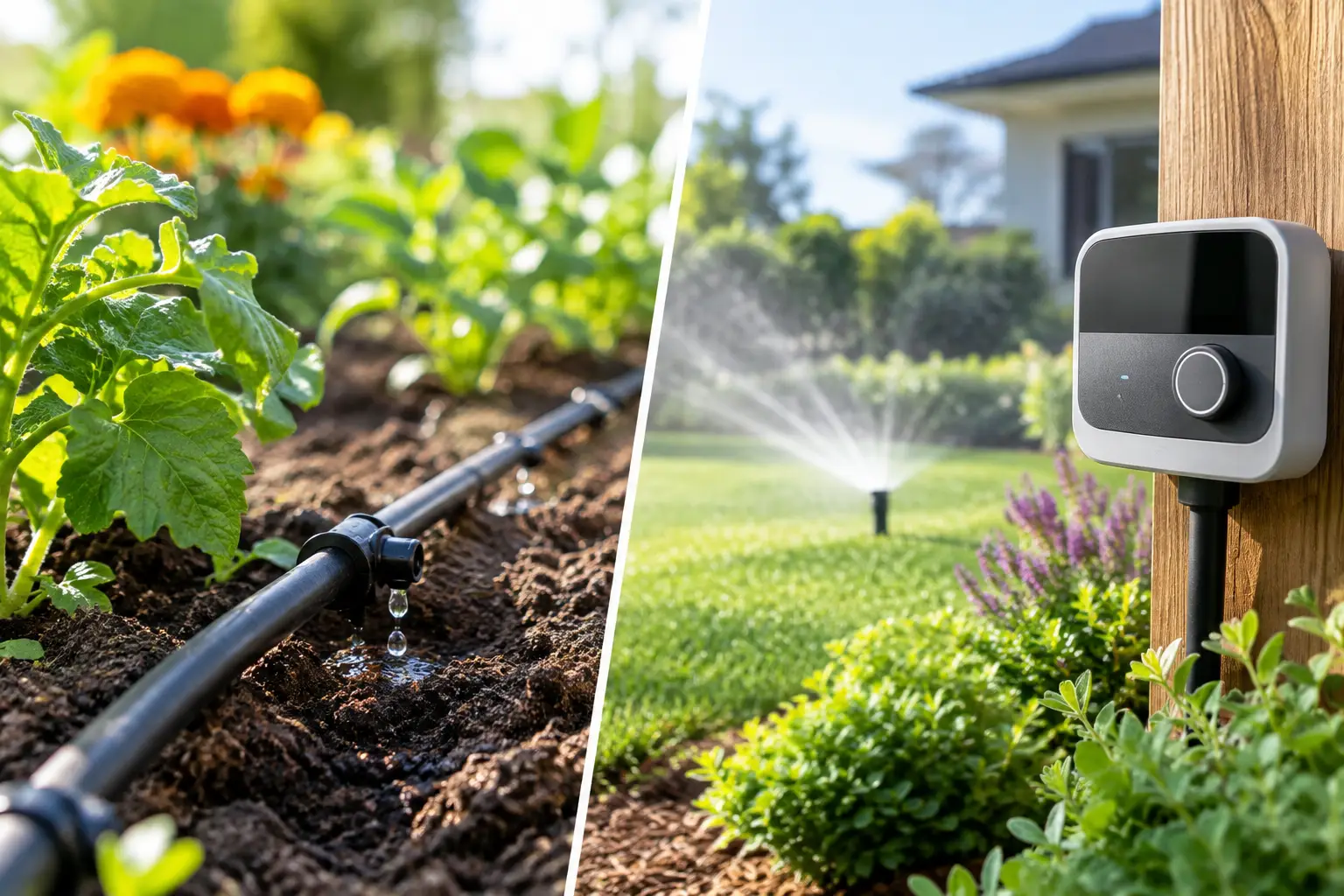
A drip line can deliver water exactly where you want it, but it cannot tell you whether your kangaroo paw is already wet enough after rain. That is the real question in drip irrigation versus smart watering: not which method looks more advanced, but whether your garden is receiving the right amount of water at the right time.
For many Australian homes, the best answer is not choosing one over the other. Drip irrigation is often the most efficient way to physically deliver water. Smart watering is the decision-making layer that determines when that water should run, for how long, and when it should stay off.
What drip irrigation does well
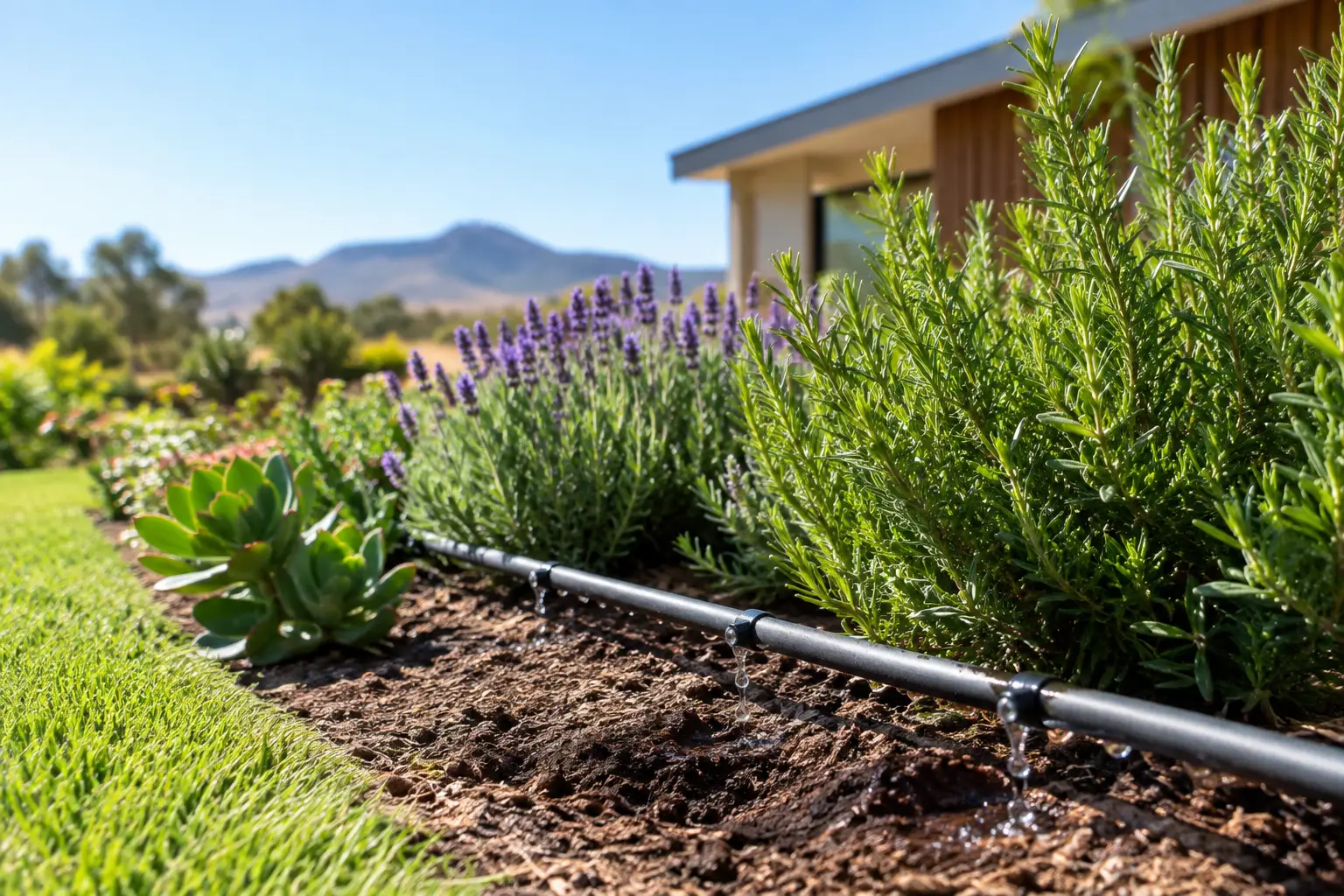
Drip irrigation moves water slowly through tubing and emitters placed close to plant roots. Instead of spraying water through the air, it soaks the soil where plants can use it. That makes it a practical choice for veggie beds, hedges, pots, narrow side gardens and densely planted borders.
It is particularly useful in hot, dry conditions. Water delivered at the soil surface is less exposed to wind and evaporation than water from a sprinkler, and foliage stays drier. That can also reduce the conditions that encourage some leaf diseases.
A well-designed drip system gives you useful physical control. You can select different emitters, position them around thirsty plants, and divide areas into zones. A citrus tree, a row of tomatoes and a native garden should not necessarily receive the same volume of water, even if they sit within a few metres of each other.
But drip irrigation has a limitation that is easy to miss: it is a delivery system, not a decision system. If it is connected to a basic timer, it will run because the calendar says Tuesday and Saturday, not because the roots need water.
Where fixed drip schedules fall short
A timer is better than forgetting to water altogether, but Australian weather changes faster than most schedules. A week of dry northerly winds can pull moisture from soil far more quickly than a mild week. Then a heavy downpour can leave a garden saturated just before the next programmed cycle.
This is where fixed schedules can waste water or create plant stress. Watering a soaked bed does not help the roots. It can contribute to poor aeration, root problems and nutrient loss. Skipping a needed watering cycle during a heat spike can be just as damaging, especially for shallow-rooted herbs, new plantings and pots.
There is also the problem of variation within one zone. Soil under a covered verandah behaves differently from soil in an exposed garden bed. A large established shrub can access deeper moisture than a newly planted perennial beside it. Even two identical pots can dry at different rates if one receives afternoon sun and the other is sheltered.
Drip lines still work beautifully in these settings. They simply need better instructions than a fixed start time and a set number of minutes.
Drip irrigation versus smart watering: the key difference
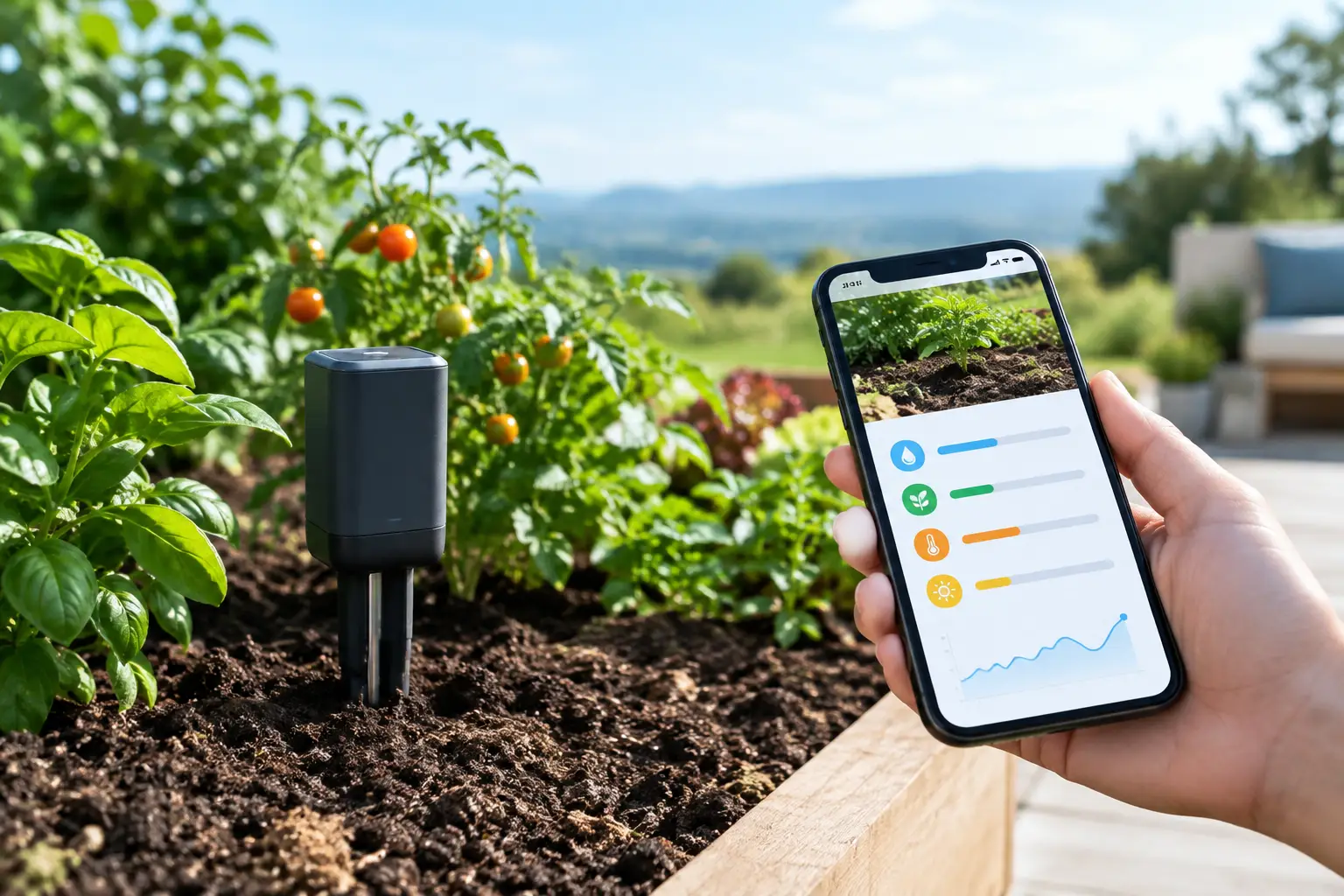
Smart watering uses real conditions to decide whether irrigation should run. Depending on the system, those conditions can include soil moisture, local weather, rainfall, temperature, plant type, zone location and a plant’s preferred moisture range.
Rather than asking, “What time should the tap turn on?”, smart watering asks, “Does this plant need water now?” That shift matters. It turns irrigation from a repeating chore into a response to the garden in front of you.
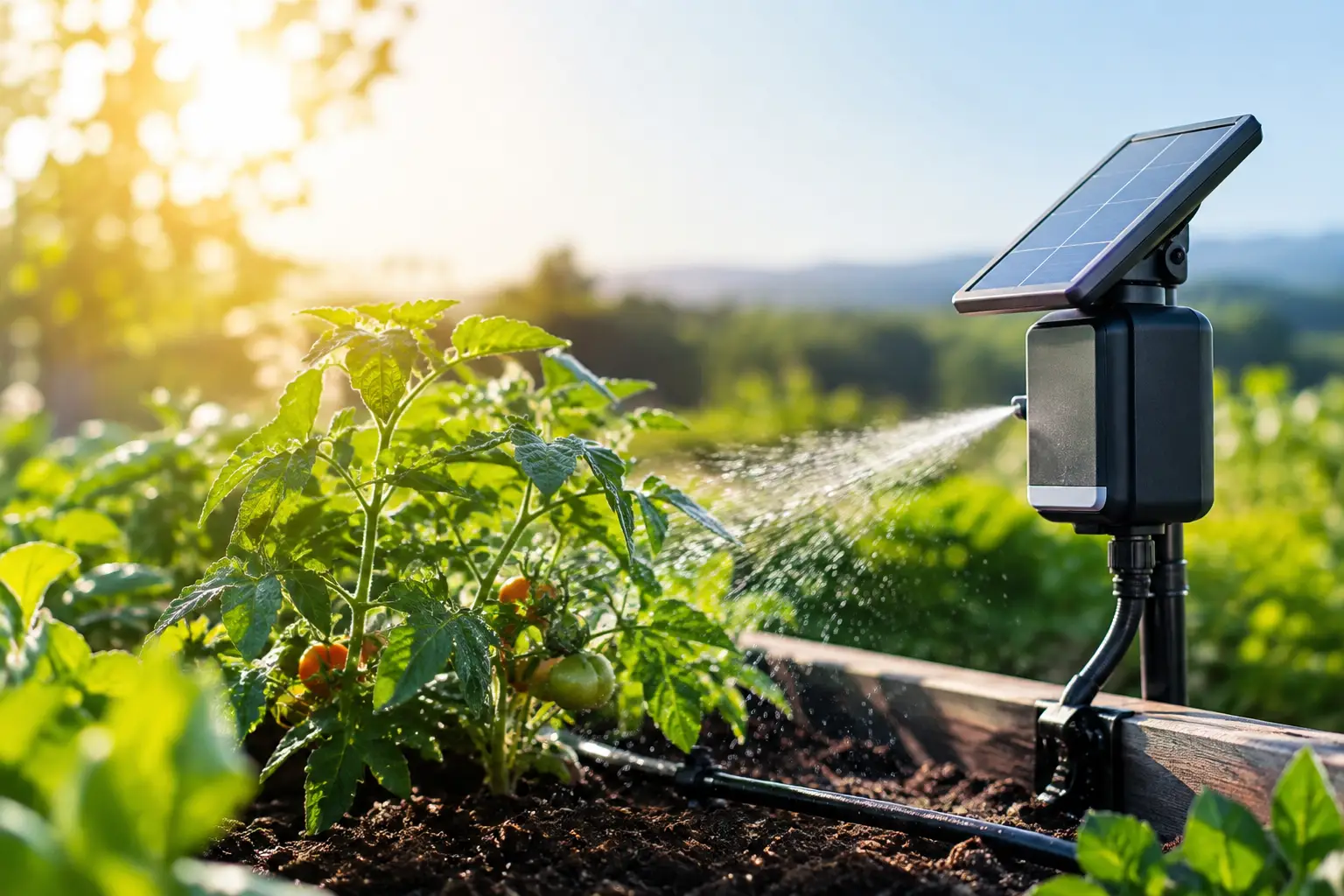
A smart system may delay a scheduled watering after rain, increase attention during hot weather, or stop a valve when the soil reaches its chosen moisture target. The outcome is more useful than simply reducing watering time: plants receive water based on need, while you retain clear control over how the system behaves.
Smart watering is not automatically better just because it has an app. A connected timer that only repeats a calendar schedule is more convenient than a manual tap, but it is not yet making soil-led decisions. The valuable capability is measurement plus automation: knowing what is happening in the root zone, setting sensible targets and controlling a compatible valve accordingly.
When drip irrigation is enough
There are gardens where a simple drip setup is the sensible choice. If you have a small, predictable bed, visit it regularly and enjoy checking the soil by hand, a manual or basic timed system may be all you need. It is affordable, familiar and straightforward to repair.
Drip irrigation can also be the right first step if you currently water with a hose. Moving from overhead hand watering to emitters near the roots can bring a noticeable improvement in consistency and water use without adding much complexity.
The trade-off is attention. You still need to adjust the programme as seasons change, pause it after meaningful rain, check for blocked emitters and notice when a plant is drying out faster than expected. For some gardeners, that is part of the enjoyment. For others, it becomes one more task that slips through the cracks during a busy week or a holiday.
When smart watering earns its place
Smart watering becomes more valuable as your garden becomes more varied. It suits homes with multiple zones, a mix of lawns and beds, edible gardens, lots of pots, new landscaping or plants with distinctly different moisture needs.
It is also a practical fit for people who want healthier plants without becoming full-time irrigation managers. Instead of remembering which pot dries first, whether the side garden received rain, or when the veggie patch was last watered, you can set up a system to monitor conditions and act on clear rules.
For renters with a private courtyard or balcony garden, the scale may be smaller but the need can be greater. Pots have limited soil volume and can dry quickly. A simple sensor and valve setup can protect plants during hot days without requiring a permanent, complicated installation.
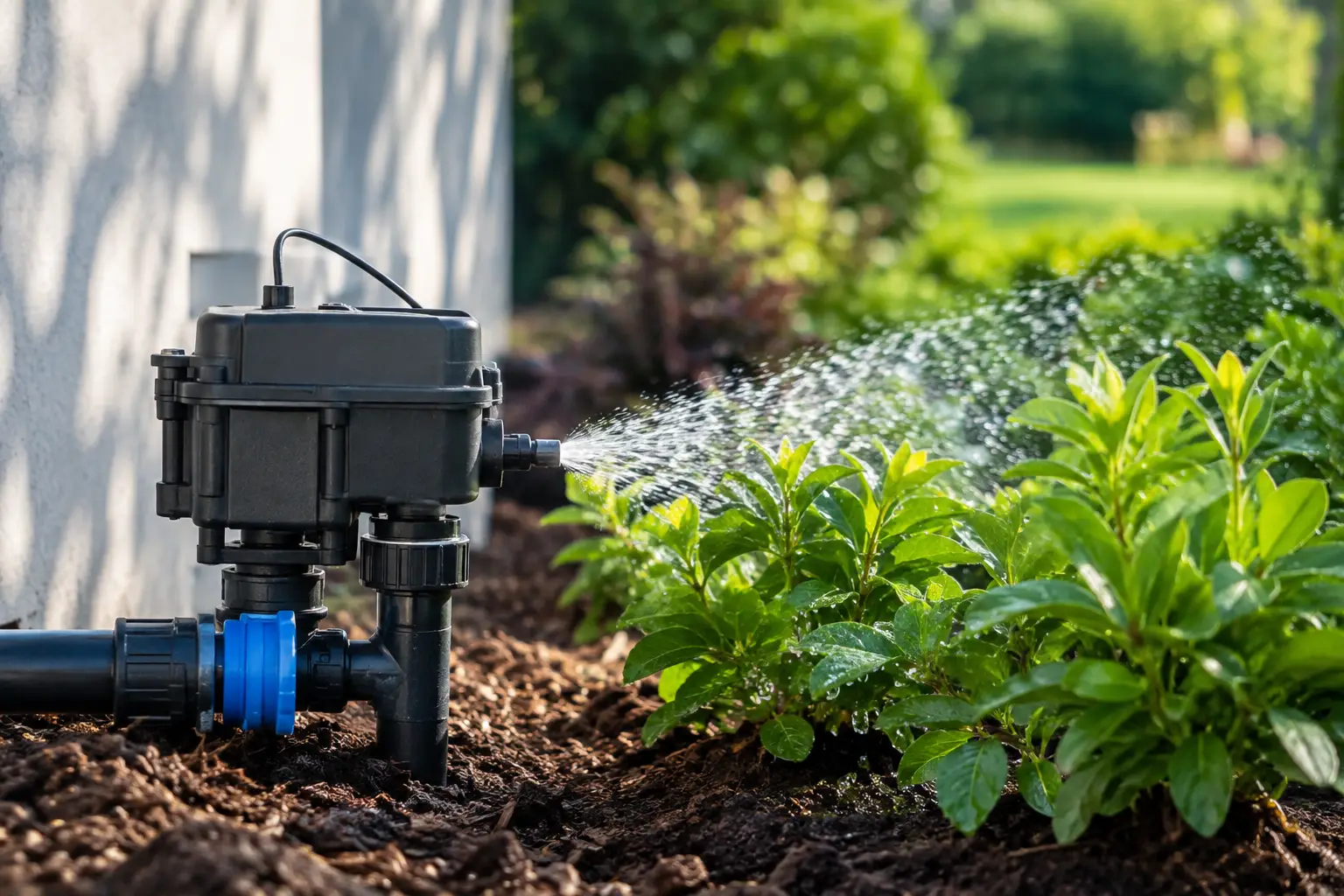
The strongest smart setups avoid locking you into a single brand’s ecosystem. Look for support for the connected-home tools you already use, including Matter, Apple Home, Google Home or Home Assistant, alongside compatible smart valves and soil sensors. That gives you flexibility to build around your garden rather than replacing equipment that already works.
The most water-efficient setup uses both
The practical choice is often drip irrigation controlled by smart watering. Drip tubing handles efficient delivery at the roots. Soil sensors and plant-specific targets determine whether the valve opens. Weather awareness adds another useful layer, helping the system avoid watering blindly through rain or adjust to changing conditions.
Think of it as separating the plumbing from the judgement. The drip line is the hand that delivers water. The smart system is the part that decides whether that hand should move.
This combination also makes zone design more meaningful. Group plants with similar needs where possible, then give each zone a realistic moisture target. A sunny veggie bed might need a different threshold from a shaded fern corner. Native plants often need a different approach again, particularly once established. The goal is not to force every plant into one schedule, but to organise the garden so the automation can make sensible choices.
Verde takes this plant-led approach further by combining garden zones, moisture targets, soil readings, local weather and compatible valve control in one app. Photograph a plant to identify it and receive guidance on its preferred moisture range, then use that information to automate watering around actual conditions. It is one simple flow, not a dozen chores, with no hub and no subscription required.
What to check before upgrading
Before adding smart control, inspect the basics. A smart valve cannot correct a kinked tube, a clogged emitter or poor drainage. Run each zone and look for dry patches, leaks and emitters that have shifted away from the plant root area.
Then consider where a soil sensor will be most useful. Place it in representative soil, not directly under an emitter or in an unusually damp corner. In a mixed zone, choose the plant that is most likely to suffer if it dries out, or redesign the zone if the moisture needs are too far apart.
It is also worth setting expectations around weather data. Rainfall forecasts are helpful, but they do not tell you exactly how much water reached soil beneath dense foliage, an eave or a balcony cover. Soil moisture readings provide the local evidence. Used together, weather and soil data create a far more reliable basis for irrigation than either a forecast or a timer alone.
Give your garden rules that match reality
The best watering system is not the one with the most gadgets. It is the one that helps your garden receive water when it genuinely needs it, without making you check taps, forecasts and soil by hand every day.
Start with efficient delivery, organise plants into sensible zones, and let real soil conditions guide the schedule. Your garden does not need another rigid timer. It needs a watering routine that can notice the difference between a scorching Thursday, a rainy weekend and a pot that dries faster than everything around it.