An Irrigation Efficiency Example That Saves Water
See an irrigation efficiency example for an Australian garden. Match soil moisture, plant needs and weather so every zone gets water only when most needed.
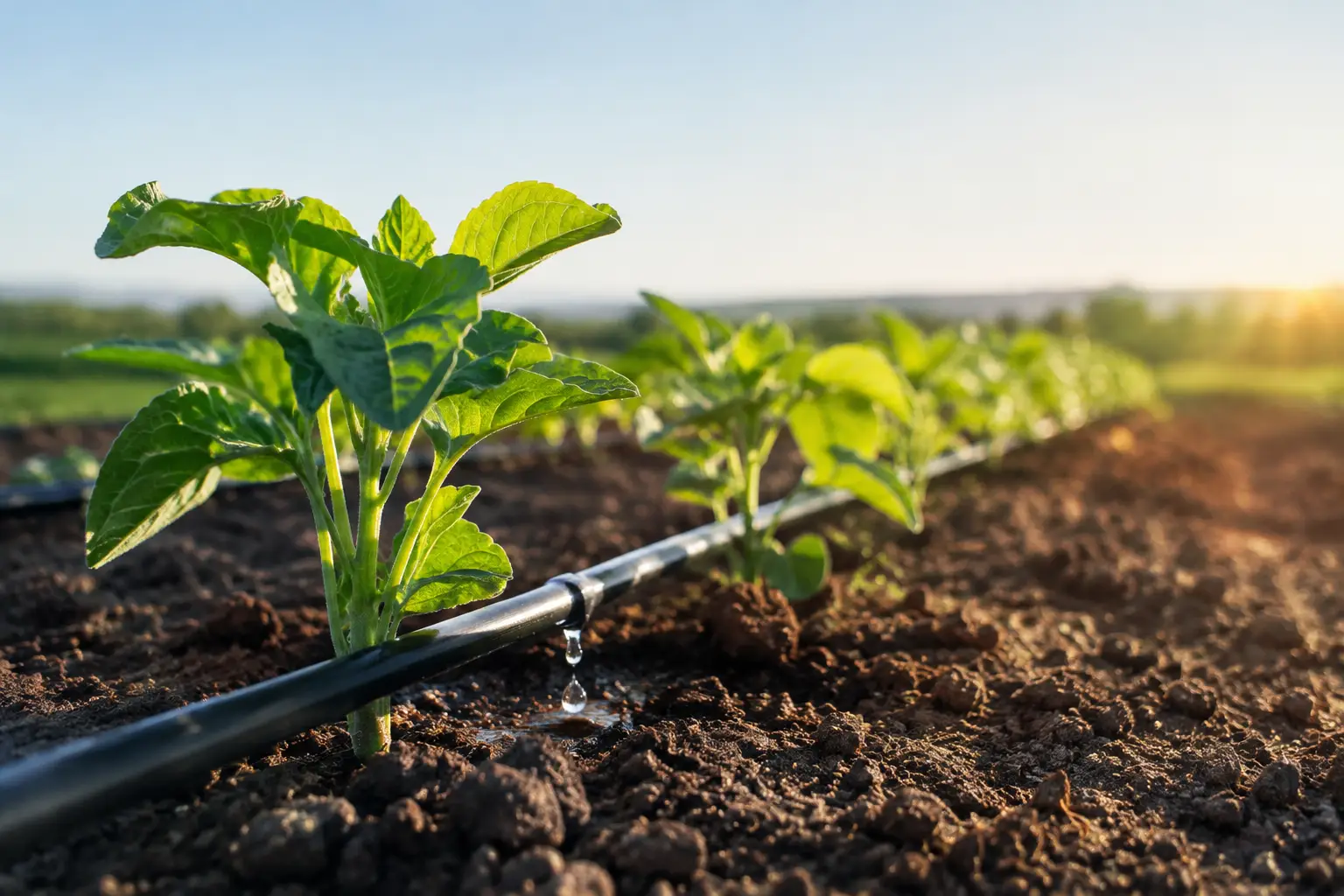
A garden bed can look thirsty at 3 pm and still have plenty of water where it counts: around the roots. That gap between what we see and what the soil holds is where water is often wasted. This irrigation efficiency example shows how a typical Australian home garden can replace fixed watering times with decisions based on soil moisture, plant needs and local weather.
The goal is not to water less at every opportunity. It is to give each plant the right amount at the right time, without running a lawn zone, veggie patch and shady fern corner as though they all live in the same conditions.
An irrigation efficiency example for a suburban garden
Picture a backyard in Melbourne, Adelaide, Perth or Sydney with three irrigated zones: a sunny lawn, raised vegetable beds and an ornamental border with established shrubs. A standard controller runs every zone for 20 minutes at 6 am, three times a week. It is simple, but it cannot tell whether rain fell overnight, whether one bed dried faster than another, or whether the lawn is still holding enough moisture below the surface.
Now add soil-moisture readings, plant-specific targets and weather-aware rules.
The lawn has a moderate moisture target. It receives water only when the sensor shows the root zone has dropped below that target and rain is not expected soon. The veggie beds have a higher target because lettuce, basil and young seedlings suffer quickly when their soil dries. The shrub border has a lower target and can go longer between watering cycles once plants are established.
On a cool week with steady rainfall, the system may skip every scheduled watering event. During a hot, dry spell, the veggie bed may water briefly each morning while the border waits another two days. This is irrigation efficiency in practice: not a blanket reduction, but water applied according to real demand.
Why a timer is only a starting point
A timer knows the day and time. It does not know whether a heatwave arrived, a storm soaked the garden, mulch kept the bed damp, or a dripper has been blocked by soil or roots. Fixed schedules are useful for basic automation, but they make an assumption that each week looks much like the last.
Australian gardens rarely behave that neatly. Summer temperatures can swing sharply, coastal gardens and inland gardens dry at different rates, and a north-facing bed may need attention long before a sheltered courtyard pot does. Even within one garden, sandy soil drains quickly while clay can hold water long after the surface appears dry.
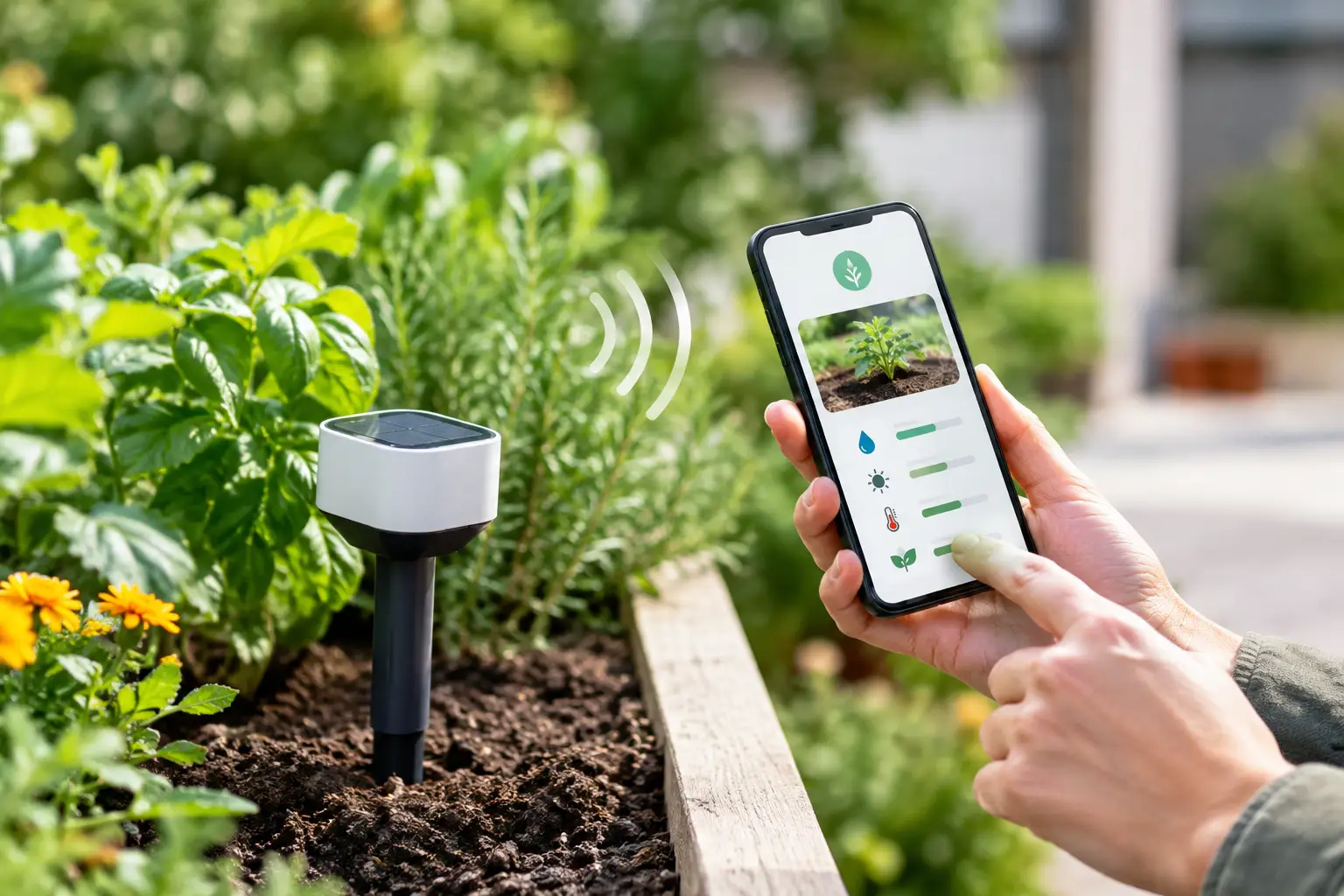
That is why efficient irrigation starts with soil conditions rather than calendar rules. A sensor gives the system a live signal from the growing medium. A defined target turns that reading into an action: water when the soil is too dry for that plant, then stop when its preferred range is restored.
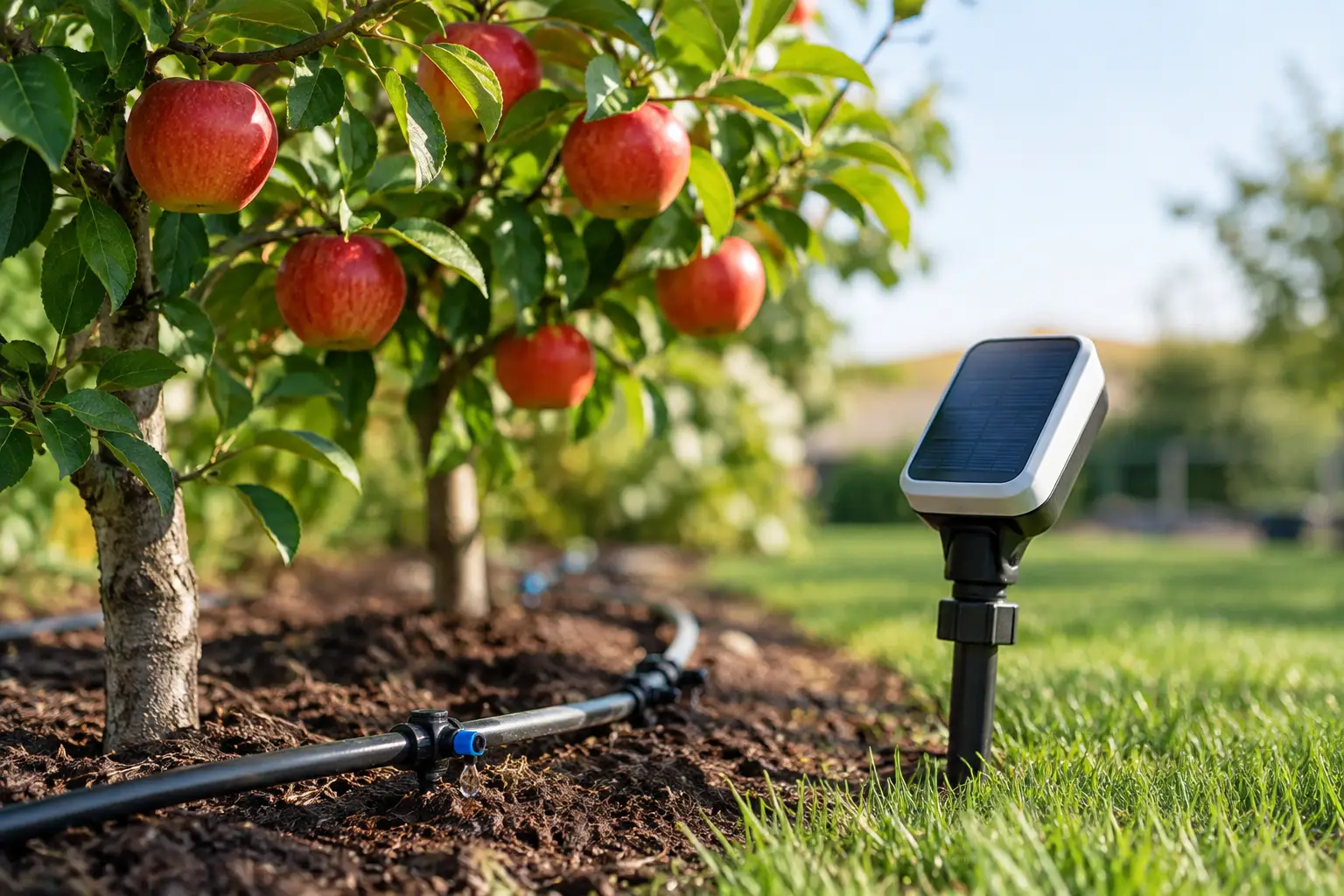
There is a trade-off. Sensors need sensible placement and occasional checking. Put one beside a dripper that always gets a direct soak and it may not represent the wider bed. Place it too close to the surface and it may report rapid swings that do not reflect root-zone moisture. For most garden beds, position the sensor where active roots are growing, away from the immediate splash zone of an emitter.
What the numbers can look like
Consider the same three-zone garden over a fortnight in late summer. With a fixed programme, all zones run for 20 minutes three times a week. That is six cycles per zone, or 120 minutes per zone across the fortnight.
A moisture-led approach produces a different result. The lawn runs four times for 18 minutes after its soil falls below target. The veggie bed runs seven times for 12 minutes because shallow-rooted edible plants need more frequent top-ups. The established shrub border runs twice for 20 minutes, helped by mulch and a small shower of rain.
The total runtime is 72 minutes for lawn, 84 minutes for vegetables and 40 minutes for shrubs. Instead of 360 minutes of watering, the garden uses 196 minutes. That is a 46 per cent reduction in valve runtime in this example, while the vegetables receive more responsive care than they did on the old schedule.
Runtime is not exactly the same as litres saved. Actual water use depends on flow rate, pressure, sprinkler or drip design, leaks and runoff. But the principle holds: removing unnecessary cycles is often the quickest path to lower use. It can also reveal a design issue. If a garden keeps running longer than expected without reaching its target, check for clogged emitters, uneven coverage, a leaking line or a sensor in the wrong location.
Efficient does not always mean shorter watering
A healthy deep-rooted lawn may benefit from a longer, less frequent soak rather than a light daily sprinkle. A herb pot in full sun may need a short drink more often. Watering efficiency is about matching application to the plant and soil, not pursuing the lowest possible runtime.
This matters because under-watering is not a win. Stressed plants are more prone to scorch, poor growth and pest pressure. Replacing dead plants also carries a cost in water, money and time. The better target is a stable moisture range that supports healthy roots without keeping soil constantly saturated.
Build the garden around zones and plant targets
A watering zone should group plants with similar conditions, not simply plants that happen to sit beside each other. A lawn, roses and drought-tolerant natives connected to the same valve force a compromise. One group will usually receive too much or too little.
Start by organising the garden into practical zones: lawns, edible beds, potted plants, ornamental borders and indoor plants if they use connected monitoring. Then identify the plants within each area and set a moisture target that suits the group. A photo-based plant identification tool can help when you have inherited a garden or forgotten exactly what is growing in a crowded bed.
For mixed borders, choose the needs of the most sensitive plants or separate them where possible. New plantings also deserve their own temporary approach. Their roots have not spread into surrounding soil, so they dry faster than established shrubs nearby. Once established, their moisture target and watering pattern can change.
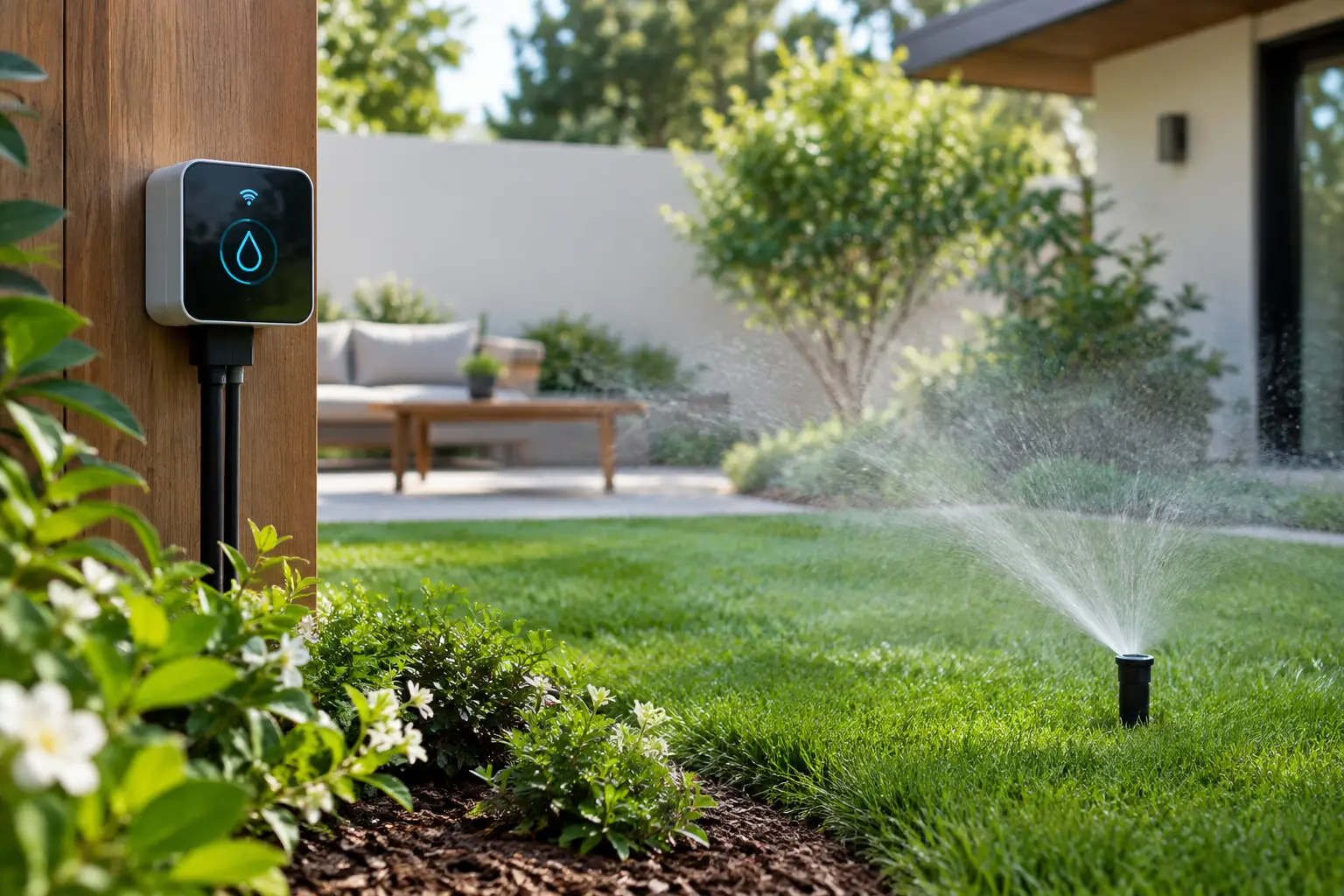
Verde brings this into one simple flow: organise plants by zone, define moisture targets, read the soil and control compatible smart valves when the garden actually needs water. It works with existing compatible devices, with no hub and no subscription required.
Add weather without handing control to the forecast
Weather awareness is valuable because it prevents obvious waste, such as watering before meaningful rain. It should not become the only source of truth. Forecast rainfall can miss your street, and a light shower may wet leaves without reaching the root zone under dense foliage or mulch.
Use weather as a useful second check alongside soil moisture. If rain has soaked the bed and the sensor confirms the target is met, skip watering. If rain is forecast but the veggie patch is already dry and seedlings are wilting, the soil reading should carry more weight. Your garden needs care based on what happened, not just what a forecast predicted.
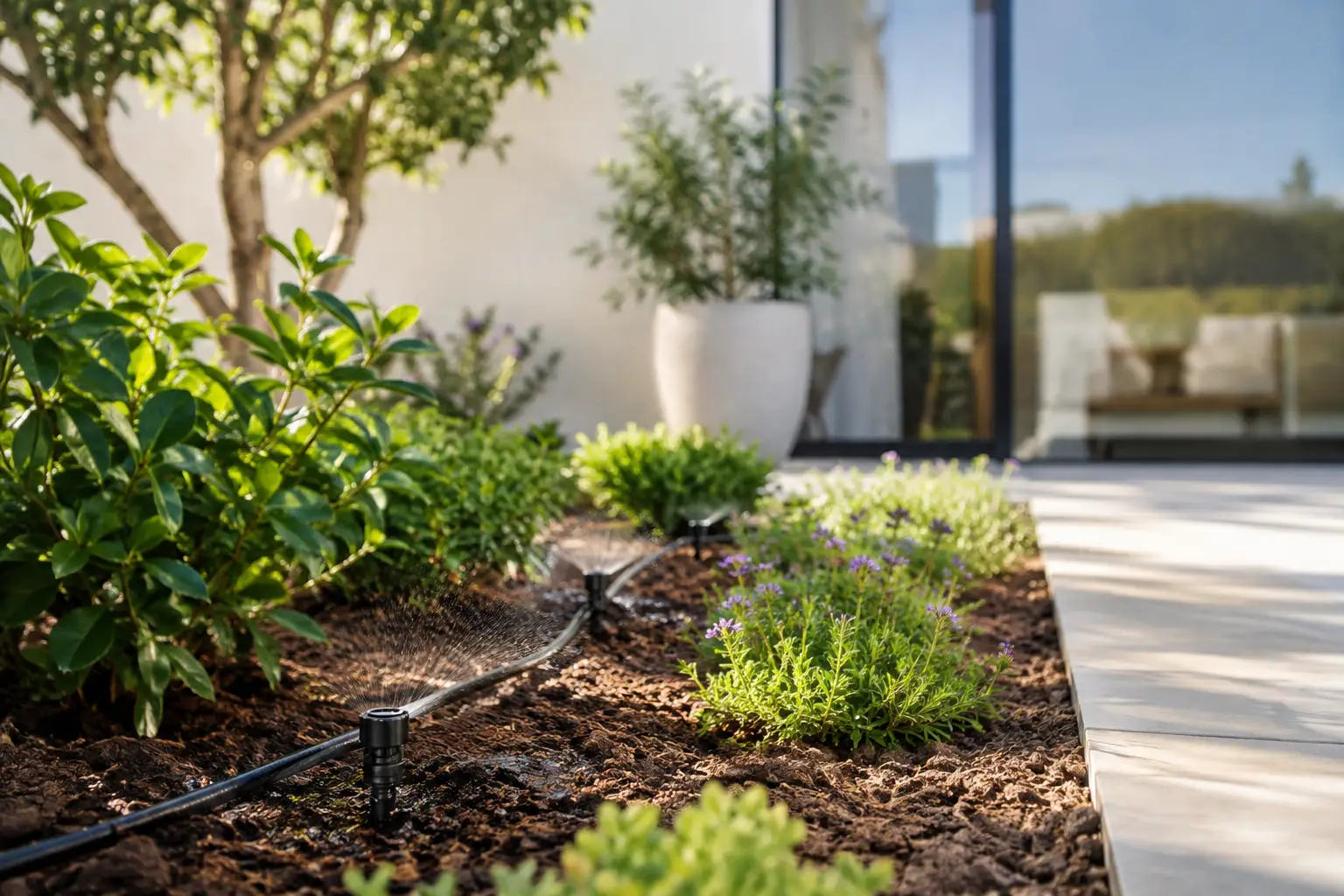
Hot weather also changes the timing question. Early morning watering usually gives water a better chance to reach roots before evaporation rises. Evening watering can be practical for some gardens, though repeatedly wet foliage overnight may encourage disease in susceptible plants. Drip irrigation keeps water close to the soil and is generally more efficient than spraying broad areas, especially in exposed, windy spots.
Check the system, not just the app
Automation reduces repetitive chores, but it should make garden checks more useful rather than eliminate them. Walk the garden after an irrigation cycle occasionally. Look for runoff down paths, dry patches between emitters, pooling water, damaged mulch and plants that do not match their sensor reading.
A sensor that reports dry soil while plants are thriving may be placed too shallowly. A sensor that always reports wet soil while leaves yellow may sit in a waterlogged pocket. Data is most helpful when it is grounded in what the garden is showing you.
Also review seasonal changes. A target that works in January may be too generous in May. Adjusting rules as daylight, rainfall and plant growth shift is a small task compared with manually managing every watering event.
The most useful irrigation system is not the one with the most settings. It is the one that notices when a plant needs water, avoids watering when it does not, and leaves you with a healthier garden and one less chore to remember.